
Promote a true conscious and active travel!!

Follow Us
TOP
Image Alt
Welcome to Ecuador!

Minka Ecuador

Welcome to Ecuador!!

Dear traveller,

MINKA welcomes you to Ecuador, a very diverse and colorful country. This blog is a guideline for our visitors; it contains useful travel information and some highlights features of our country and customs.

Why Ecuador?

Ecuador is the perfect destination for those travelers who love nature and adventure. Visitors can enjoy the benefits of a growing variety of tourism facilities as well the hospitality of the people. There are lots of places (some still undiscovered) to stay either alone, in families with special friends or in group, ranging from simple lodgings or in local families to places that offer a rare level of international luxury.

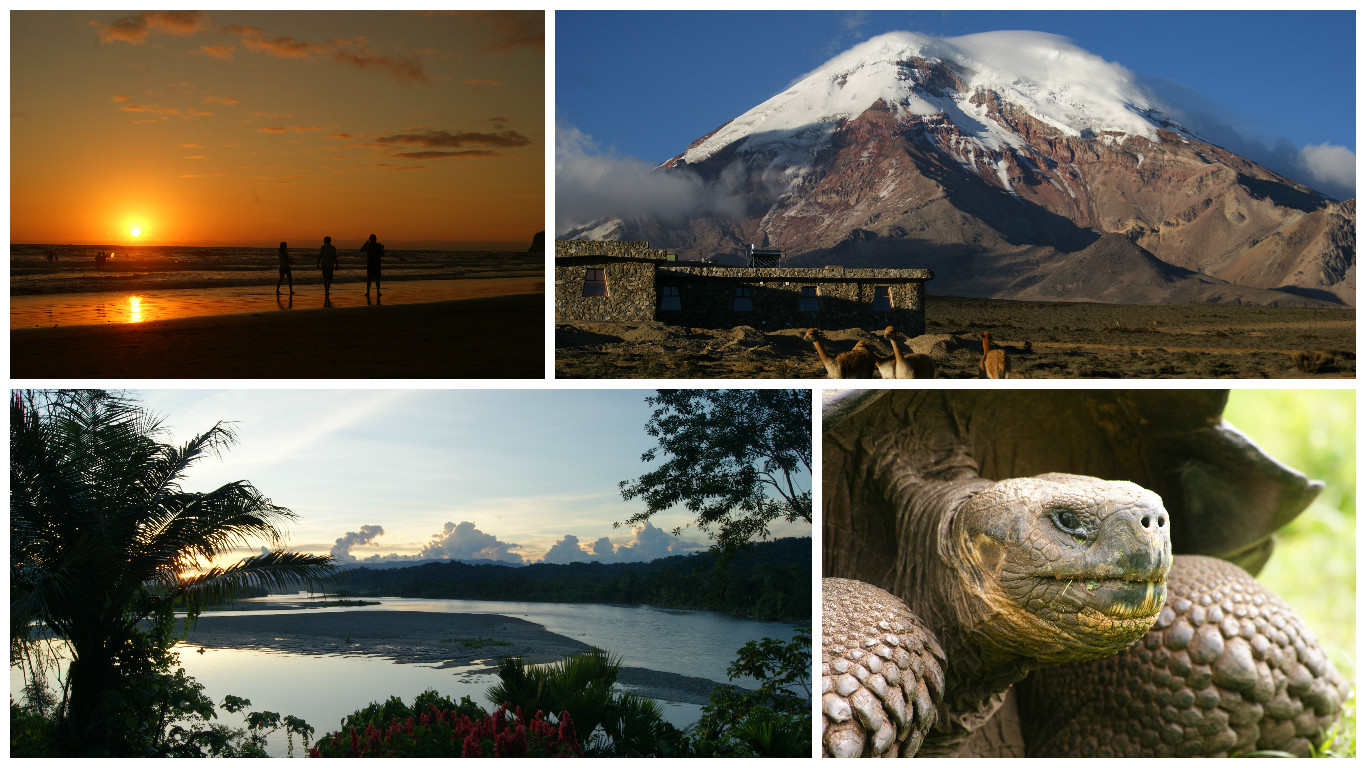
Ecuador´s incomparable natural beauty, its hospitable people and its fascinating history make this small country in south America an ideal destination for your vacations in our 4 different worlds.

You can explore the amazon rainforest, one of the new 7 world naturals wonders, by canoe, guided by local indigenous people. Be part of festivals that are a mixture of catholic religion and old paganism, visit one of many Andean indigenous market or dance to the rhythms of afro-ecuadorian music in El Chota Valley or in the northwest of Ecuador. Enjoy the Enchanted Galapagos Islands, walk through a misty cloud forest and go birding from here to the Paramo in the highland or in the other side on direction to the Coast. Ecuador has more than 1600 species of birds. There are places you might even see a spectacled bear, a puma or the majestic Andean condor. Share the jaguar spirit with the Achuar community in a typical amazon ritual or a good shrimp ceviche in one of beaches located in more than 350 km of pacific coastline and sail to see humpback whales from June to late September. Take part of conservation process of native forest and old lifestyles by visiting programs managed by local and indigenous communities, in association with NGO´s and private companies.

We are sure that you will go back to your country feeling that your trip has made a difference in you and truly contributed to develop a sustainable and ecological tourism in Ecuador.

When to come?

Ecuador is a year-round destination; each region has its optimal visiting season. Instead of the typical 4 seasons, Ecuador only has rainy and dry seasons, but there are significant variations among the geographical regions, and temperature is often a factor of altitude.

The highlands or the Andean World enjoys a temperate climate with 18 degrees Celsius average (65´s Farenheit) all year around. Day by day, temperature ranges from 13 to 23 degrees Celsius. Generally, the drier months are from June to September with very clear skies in most of the Andean region and the wettest from January to May, expecting to have more rain but not all day long. Usually, rains late afternoons while the mornings are dry.

In the amazon rainforest or jungle area is hot and humid. Its rains frequently (more than 250 days year-round) and often unexpectedly, but the rain is warm and refreshing. From April to September is usually the rainiest. The average year-round temperature is 27 celsius (80´s Farenheit) during the day.

The Pacific Coast and Galapagos Islands have similar climate conditions. From December to May is the hot and rainy season with temperatures from 21 to 33 Celsius (70 – 90´s Fahrenheit). From June to November cools down and the temperatures range from 18 to 26 Celsius (60 – 70´s Fahrenheit). In the case of Galapagos, this season is called garua (cooler season).

SAFETY TIPS

Ecuador is a safe and wonderful country for travel but no matter where you go, it´s wise to get some travel insurance specially if your daily health care needs special medications or in cases you have any medical problem that does develop. While the potential dangers can seem quite commons, in reality, few travelers experience anything more than an upset stomach.

In case of recommended vaccinations, first plan ahead for getting them. Although no vaccines are legally mandated, the next are recommended like hepatitis A, typhoid and yellow fever. About Malaria, Ecuador reports a few cases in the Amazon region and Esmeraldas province in the Coast. If you plan to visit these tropical areas, bring your own medication.

In Ecuador, we don’t have any type of terrorism, coca plantation is illegal. Lucky of us, problems related with this are not an issue. But like any country in the world, specially in big cities, please take precaution at all times when visiting crowded places and markets to avoid pickpockets. Do not wear jewelry on the streets and do keep wallets, purses and bags securely. Do not carry all of your cash, passports and valuables with you. Please consult with your guide, our staff members or hotel staff as to which areas are best avoided, when not on a tour.

In terms of water, Quito has the best water of Ecuador for its quality, but anyway tap water is not very recommendable because visitors are not used to it. Better if you drink bottled water. About food, the best is to avoid raw vegetables with the exception of hotel and recommended restaurants. Eat only fruits you can peel. Use your judgement where you choose to eat and avoid street vendors.

Finally, for being located at the Equator, always use a sun block, even on cloudy days. The sun is very strong.

ECUADOR GENERAL FACTS

Area: 256.370 km2 (98.985 square miles), about the size of New Zealand or US state of Nevada and it´s somewhat larger than the United Kingdom.

Important cities: Quito & Cuenca in the highlands, and Guayaquil in the Coast region.

Language: Officially, Ecuador has 3 (Spanish, Kiwchua and Shuar) but 14 languages are spoken in total.

Religion: The predominant religion is Roman Catholic, but freedom of creeds exists.

Population: around 17 million at 2020.

Currency: US dollar only since 2000. Most major credit cards are accepted in hotels, restaurants and stores. ATM machines are available in the cities and larger towns.

Time: Continental Ecuador is 5 hours behind GMT (equivalent to USA EST during daylight saving time). The Galapagos Islands are 1 hour behind mainland Ecuador time.

Bargaining: It is acceptable at the indigenous markets and crafts stores in rural villages.

Electricity: 110 volts. Plugs have two flat prongs, as in the USA. Adapters can be obtained easily.

Taxes: 12% VAT and 10% service in most hotels and in some restaurants.

Ecuador is the second smallest country in south america, but its range of offerings is no less than astounding


Dear traveller,

MINKA welcomes you to Ecuador, a very diverse and colorful country. This blog is a guideline for our visitors; it contains useful travel information and some highlights features of our country and customs.

Why Ecuador?

Ecuador is the perfect destination for those travelers who love nature and adventure. Visitors can enjoy the benefits of a growing variety of tourism facilities as well the hospitality of the people. There are lots of places (some still undiscovered) to stay either alone, in families with special friends or in group, ranging from simple lodgings or in local families to places that offer a rare level of international luxury.

Ecuador´s incomparable natural beauty, its hospitable people and its fascinating history make this small country in south America an ideal destination for your vacations in our 4 different worlds.

You can explore the amazon rainforest, one of the new 7 world naturals wonders, by canoe, guided by local indigenous people. Be part of festivals that are a mixture of catholic religion and old paganism, visit one of many Andean indigenous market or dance to the rhythms of afro-ecuadorian music in El Chota Valley or in the northwest of Ecuador. Enjoy the Enchanted Galapagos Islands, walk through a misty cloud forest and go birding from here to the Paramo in the highland or in the other side on direction to the Coast. Ecuador has more than 1600 species of birds. There are places you might even see a spectacled bear, a puma or the majestic Andean condor. Share the jaguar spirit with the Achuar community in a typical amazon ritual or a good shrimp ceviche in one of beaches located in more than 350 km of pacific coastline and sail to see humpback whales from June to late September. Take part of conservation process of native forest and old lifestyles by visiting programs managed by local and indigenous communities, in association with NGO´s and private companies.

We are sure that you will go back to your country feeling that your trip has made a difference in you and truly contributed to develop a sustainable and ecological tourism in Ecuador.

When to come?

Ecuador is a year-round destination; each region has its optimal visiting season. Instead of the typical 4 seasons, Ecuador only has rainy and dry seasons, but there are significant variations among the geographical regions, and temperature is often a factor of altitude.

The highlands or the Andean World enjoys a temperate climate with 18 degrees Celsius average (65´s Farenheit) all year around. Day by day, temperature ranges from 13 to 23 degrees Celsius. Generally, the drier months are from June to September with very clear skies in most of the Andean region and the wettest from January to May, expecting to have more rain but not all day long. Usually, rains late afternoons while the mornings are dry.

In the amazon rainforest or jungle area is hot and humid. Its rains frequently (more than 250 days year-round) and often unexpectedly, but the rain is warm and refreshing. From April to September is usually the rainiest. The average year-round temperature is 27 celsius (80´s Farenheit) during the day.

The Pacific Coast and Galapagos Islands have similar climate conditions. From December to May is the hot and rainy season with temperatures from 21 to 33 Celsius (70 – 90´s Fahrenheit). From June to November cools down and the temperatures range from 18 to 26 Celsius (60 – 70´s Fahrenheit). In the case of Galapagos, this season is called garua (cooler season).

SAFETY TIPS

Ecuador is a safe and wonderful country for travel but no matter where you go, it´s wise to get some travel insurance specially if your daily health care needs special medications or in cases you have any medical problem that does develop. While the potential dangers can seem quite commons, in reality, few travelers experience anything more than an upset stomach.

In case of recommended vaccinations, first plan ahead for getting them. Although no vaccines are legally mandated, the next are recommended like hepatitis A, typhoid and yellow fever. About Malaria, Ecuador reports a few cases in the Amazon region and Esmeraldas province in the Coast. If you plan to visit these tropical areas, bring your own medication.

In Ecuador, we don’t have any type of terrorism, coca plantation is illegal. Lucky of us, problems related with this are not an issue. But like any country in the world, specially in big cities, please take precaution at all times when visiting crowded places and markets to avoid pickpockets. Do not wear jewelry on the streets and do keep wallets, purses and bags securely. Do not carry all of your cash, passports and valuables with you. Please consult with your guide, our staff members or hotel staff as to which areas are best avoided, when not on a tour.

In terms of water, Quito has the best water of Ecuador for its quality, but anyway tap water is not very recommendable because visitors are not used to it. Better if you drink bottled water. About food, the best is to avoid raw vegetables with the exception of hotel and recommended restaurants. Eat only fruits you can peel. Use your judgement where you choose to eat and avoid street vendors.

Finally, for being located at the Equator, always use a sun block, even on cloudy days. The sun is very strong.

ECUADOR GENERAL FACTS

Area: 256.370 km2 (98.985 square miles), about the size of New Zealand or US state of Nevada and it´s somewhat larger than the United Kingdom.

Important cities: Quito & Cuenca in the highlands, and Guayaquil in the Coast region.

Language: Officially, Ecuador has 3 (Spanish, Kiwchua and Shuar) but 14 languages are spoken in total.

Religion: The predominant religion is Roman Catholic, but freedom of creeds exists.

Population: around 17 million at 2020.

Currency: US dollar only since 2000. Most major credit cards are accepted in hotels, restaurants and stores. ATM machines are available in the cities and larger towns.

Time: Continental Ecuador is 5 hours behind GMT (equivalent to USA EST during daylight saving time). The Galapagos Islands are 1 hour behind mainland Ecuador time.

Bargaining: It is acceptable at the indigenous markets and crafts stores in rural villages.

Electricity: 110 volts. Plugs have two flat prongs, as in the USA. Adapters can be obtained easily.

Taxes: 12% VAT and 10% service in most hotels and in some restaurants.

Ecuador is the second smallest country in south america, but its range of offerings is no less than astounding


Querido viajero,

MINKA les da la bienvenida a Ecuador, un país muy diverso y colorido. Este blog es una guía para nuestros visitantes; contiene información útil sobre viajes y algunas características destacadas de nuestro país y costumbres.

¿Por qué Ecuador?

Ecuador es el destino perfecto para aquellos viajeros amantes de la naturaleza y la aventura. Los visitantes pueden disfrutar de los beneficios de una creciente variedad de instalaciones turísticas, así como de la hospitalidad de su gente. Hay muchos lugares (algunos aún por descubrir) para quedarse solo, en familias, con amigos especiales o en grupo, que van desde alojamientos sencillos o en familias locales hasta lugares que ofrecen un nivel de lujo internacional, poco común.


La incomparable belleza natural de Ecuador, su gente hospitalaria y su fascinante historia hacen de este pequeño país de América del Sur un destino ideal para sus vacaciones en nuestros 4 mundos diferentes. Puede explorar la selva amazónica, una de las 7 nuevas maravillas naturales del mundo, en canoa, guiado por indígenas locales. Sé parte de festivales que son, una mezcla de religión católica y paganismo antiguo, visita uno de los muchos mercados indígenas andinos o baila al ritmo de la música afroecuatoriana en el Valle de El Chota, en el noroeste de Ecuador. Disfrute de las encantadoras Islas Galápagos, camine a través de un bosque nublado y observe aves desde aquí hasta el Páramo en las tierras altas. Ecuador tiene más de 1600 especies de aves. Hay lugares donde incluso se puede ver osos de anteojos, pumas, con suerte, o el majestuoso cóndor andino. Comparta el espíritu del jaguar con la comunidad Achuar en un típico ritual amazónico o un buen ceviche de camarón en una de las playas ubicadas en más de 350 km de costa pacífica y navegue para ver ballenas jorobadas desde junio hasta finales de septiembre. Participe del proceso de conservación del bosque nativo y estilos de vida antiguos visitando programas manejados por comunidades locales e indígenas, en asociación con ONG´s y empresas privadas.


Estamos seguros que volverás a tu país sintiendo que tu viaje ha marcado una diferencia en ti y realmente contribuido a desarrollar un turismo sostenible y ecológico en Ecuador.


¿Cuándo venir?

Ecuador es un destino para todo el año; cada región tiene una temporada de visita más óptima pero siempre visitables en cualquier fecha. En lugar de las típicas 4 estaciones, Ecuador solo tiene 2 periodos: una seca y otra lluviosa, con variaciones significativas entre las regiones geográficas, y la temperatura suele ser un factor de altitud.


La sierra o el mundo andino disfruta de un clima templado y un promedio de 18 grados centígrados (65 grados Farenheit) durante todo el año. Día a día, la temperatura oscila entre los 13 y los 23 grados centígrados. Generalmente, los meses más secos son de junio a septiembre con cielos muy despejados en la mayor parte de la región andina y los más húmedos de enero a mayo, esperando tener más lluvia pero no todo el día. Por lo general, llueve al final de la tarde mientras que las mañanas son secas.


La selva amazónica o zona selvática siempre es caluroso y húmedo. Llueve con frecuencia (más de 250 días durante todo el año) y a menudo de forma inesperada, pero la lluvia es cálida y refrescante. De abril a septiembre suele ser el período más lluvioso. La temperatura promedio durante todo el año es de 27 grados centígrados (80 grados Farenheit) durante el día.


La costa del Pacífico y las islas Galápagos tienen condiciones climáticas similares. De diciembre a mayo es la estación cálida y lluviosa con temperaturas de 21 a 33 grados Celsius (70 a 90 grados Fahrenheit). De junio a noviembre refresca y las temperaturas oscilan entre los 18 y los 26 grados centígrados (60 – 70 grados Fahrenheit). En el caso de Galápagos, esta temporada se llama garua (temporada más fresca).


CONSEJOS DE SEGURIDAD

Ecuador es un país seguro y maravilloso para viajar, pero a pesar de esto, no importa el lugar en el mundo, es aconsejable contratar un seguro de viaje, especialmente si su atención médica diaria necesita medicamentos especiales o en caso de tener algún problema médico que pueda agravarse. Si bien los peligros potenciales pueden parecer bastante comunes, en realidad, pocos viajeros experimentan algo más de un malestar estomacal.


En el caso de las vacunas recomendadas, primero planifique con anticipación para recibirlas. Aunque no hay vacunas legalmente obligatorias, se recomiendan las siguientes, como la hepatitis A, la fiebre tifoidea y la fiebre amarilla. Acerca de la malaria, Ecuador reporta algunos casos en la región amazónica y la provincia de Esmeraldas en la costa. Si planea visitar estas áreas tropicales, traiga su propia medicación.


En Ecuador no tenemos ningún tipo de terrorismo, la plantación de coca es ilegal. Por suerte de nosotros, los problemas relacionados con esto no son un problema. Pero como cualquier país del mundo, especialmente en las grandes ciudades, por favor tome precauciones en todo momento cuando visite lugares y mercados concurridos para evitar carteristas. No use joyas en las calles y mantenga las billeteras, carteras y bolsos de manera segura. No lleve todo su dinero en efectivo, pasaportes y objetos de valor con usted. Consulte con su guía, los miembros de nuestro personal o el personal del hotel sobre qué áreas es mejor evitar cuando no esté en un recorrido guiado.


En cuanto al agua, Quito tiene la mejor agua del Ecuador por su calidad, pero de todas formas el agua del grifo no es muy recomendable porque los visitantes no están acostumbrados a ella. Mejor si bebe agua embotellada. En cuanto a la alimentación, lo mejor es evitar las verduras crudas a excepción de los hoteles y restaurantes recomendados. Come solo frutas que puedas pelar. Use su juicio donde elija comer y evite los vendedores ambulantes.


Por último, por estar ubicado en el Ecuador, utilice siempre bloqueador solar, incluso en días nublados. El sol es muy fuerte.


DATOS GENERALES DEL ECUADOR


Área o superficie: 256.370 km2 (98.985 millas cuadradas), aproximadamente del tamaño de Nueva Zelanda o del estado de Nevada en EE. UU; y algo más grande que el Reino Unido.

Ciudades importantes: Quito y Cuenca en el altiplano; Guayaquil y Manta en la región de la Costa.

Idioma: Oficialmente, Ecuador tiene 3 (español, kiwchua y shuar) pero se hablan 14 idiomas en total.

Religión: La religión predominante es la católica romana, pero existe libertad de credo.

Población: alrededor de 17 millones en 2020.

Moneda: dólar estadounidense desde 2000. La mayoría de las principales tarjetas de crédito se aceptan en hoteles, restaurantes y tiendas. Hay cajeros automáticos disponibles en las ciudades y pueblos más grandes.

Hora: El Ecuador continental está 5 horas menos que GMT (equivalente al EST de EE. UU. Durante el horario de verano). Las Islas Galápagos están 1 hora por detrás de la hora del Ecuador continental.

Negociación: Es aceptable en los mercados indígenas y tiendas de artesanías de las aldeas rurales.

Electricidad: 110 voltios. Los enchufes tienen dos clavijas planas, como en EE. UU. Los adaptadores se pueden obtener fácilmente.

Impuestos: 12% IVA y 10% servicio en la mayoría de hoteles y en algunos restaurantes.


ECUADOR ES EL SEGUNDO PAÍS MAS PEQUEÑO DE AMERICA DEL SUR, PERO SU VARIEDAD DE OFERTA ES MÁS QUE ASOMBROSA.


Post a Comment

You don't have permission to register